
History of Portfolio Transformation
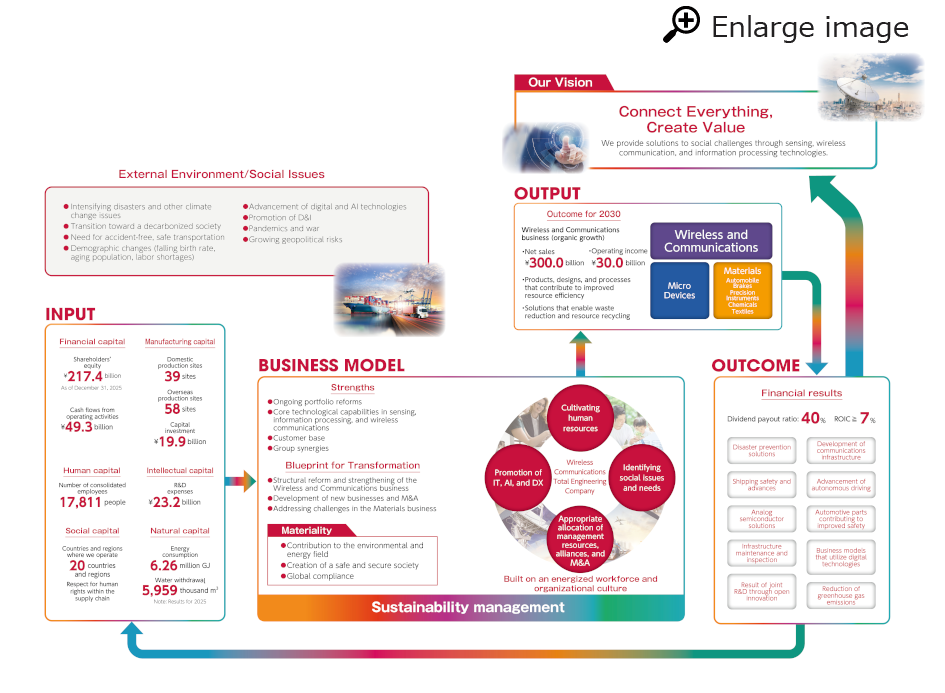
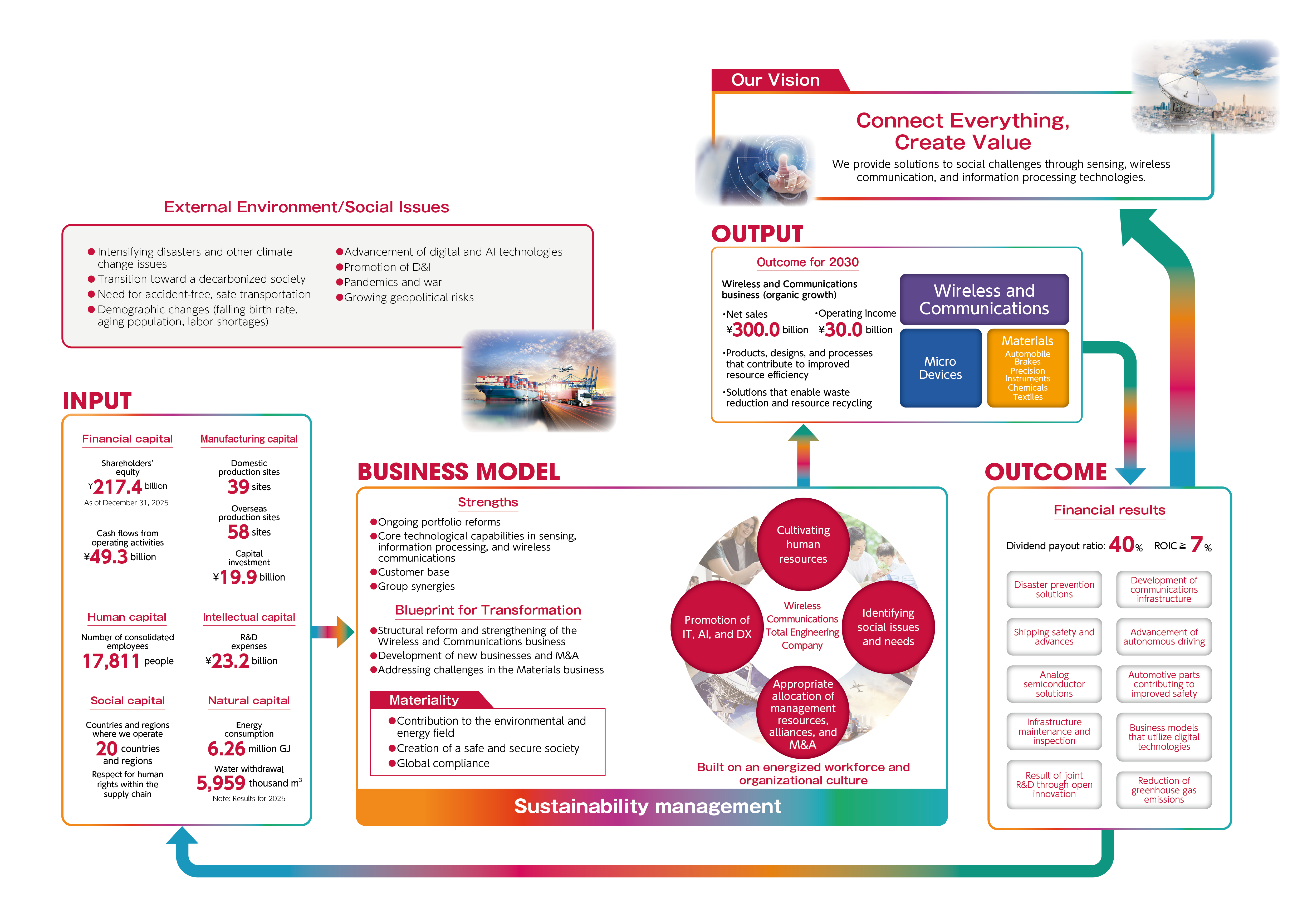
The Nisshinbo Group was founded in 1907 with the establishment of Nisshin Cotton Spinning Co., Ltd. At that time, the textile industry was a pillar of the Japanese economy, but faced with competition from low-priced overseas products, the Group has since believed that its mission is to contribute to human society through its business in accordance with the needs of the times, rather than focusing on textiles. Based on this mindset, the Group has continued to grow by aggressively promoting business portfolio transformation, incorporating Japan Radio Co., Ltd. and Hitachi Kokusai Electric Inc. as the core of its current Wireless and Communications business, as well as New Japan Radio Co., Ltd. and Ricoh Electronic Devices Co., Ltd., the core of its Micro Devices business.
From 2024, the Group has been segmented into four segments: "Wireless and Communications business"; "Micro Devices businesses"; "Materials business" which integrated the existing Automobile Brakes, Precision Instruments, Chemicals and Textiles business; and "Real Estate." The Group creates new value through numerous products and solutions that contribute to disaster prevention and mitigation, solutions to environmental issues, and the realization of a safe and secure society.
The words "sustainability" and "ESG management" are now frequently used in the world. However, the Nisshinbo Group has placed the concepts expressed in these terms at the center of its management strategy long before these terms were coined. The diverse businesses and product lines of the Group's global operations contribute significantly to achieving the targets of the Sustainable Development Goals (SDGs), and this is one of the Group's strengths.
Value-Creation Process Toward the Aims
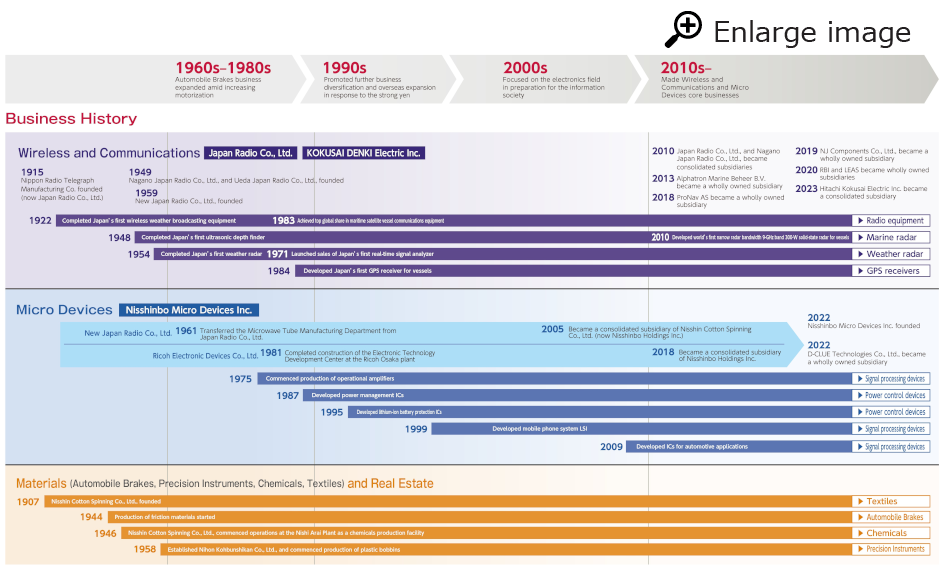
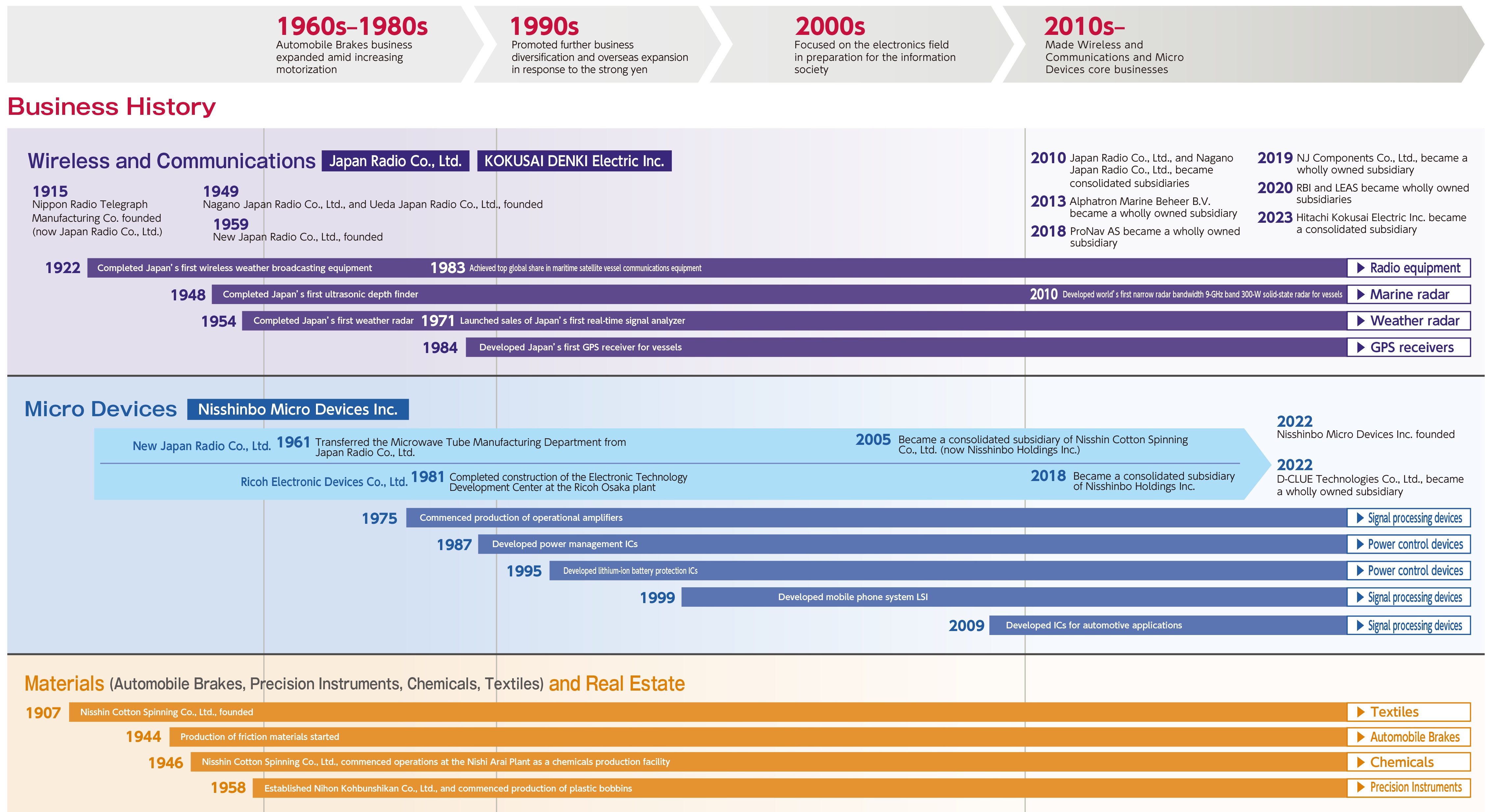
The mission of the Nisshinbo Group is to contribute to society through our business activities. Guided by the corporate philosophy, "Change and Challenge! For the creation of the future of Earth and People," the aim is to "Connect Everything, Create Value" in response to medium- to long-term changes and opportunities in the business environment. By effectively leveraging the Group’s six capitals (financial, human, intellectual, manufacturing, social relationships, and natural) and continuously transforming its portfolio, the Nisshinbo Group will provide solutions to societal challenges using its core technologies in sensing, wireless communications, and information processing.
In the effort to implement sustainable management, the Nisshinbo Group has identified the contribution to the environmental and energy field, the creation of a safe and secure society, and global compliance as material issues. To address these issues, the Group will improve its operational reliability and reduce risks within the telecommunications infrastructure and maritime transport, as well as promote autonomous driving technology, by providing products and solutions based on its core strength of technological expertise. Furthermore, the Group aims to create value that contributes to the sustainability of people and society by promoting solutions to the prevention of disasters, developing components that enhance automotive safety performance, and reducing greenhouse gas emissions associated with all business activities.