

Wireless and Communications Top Message
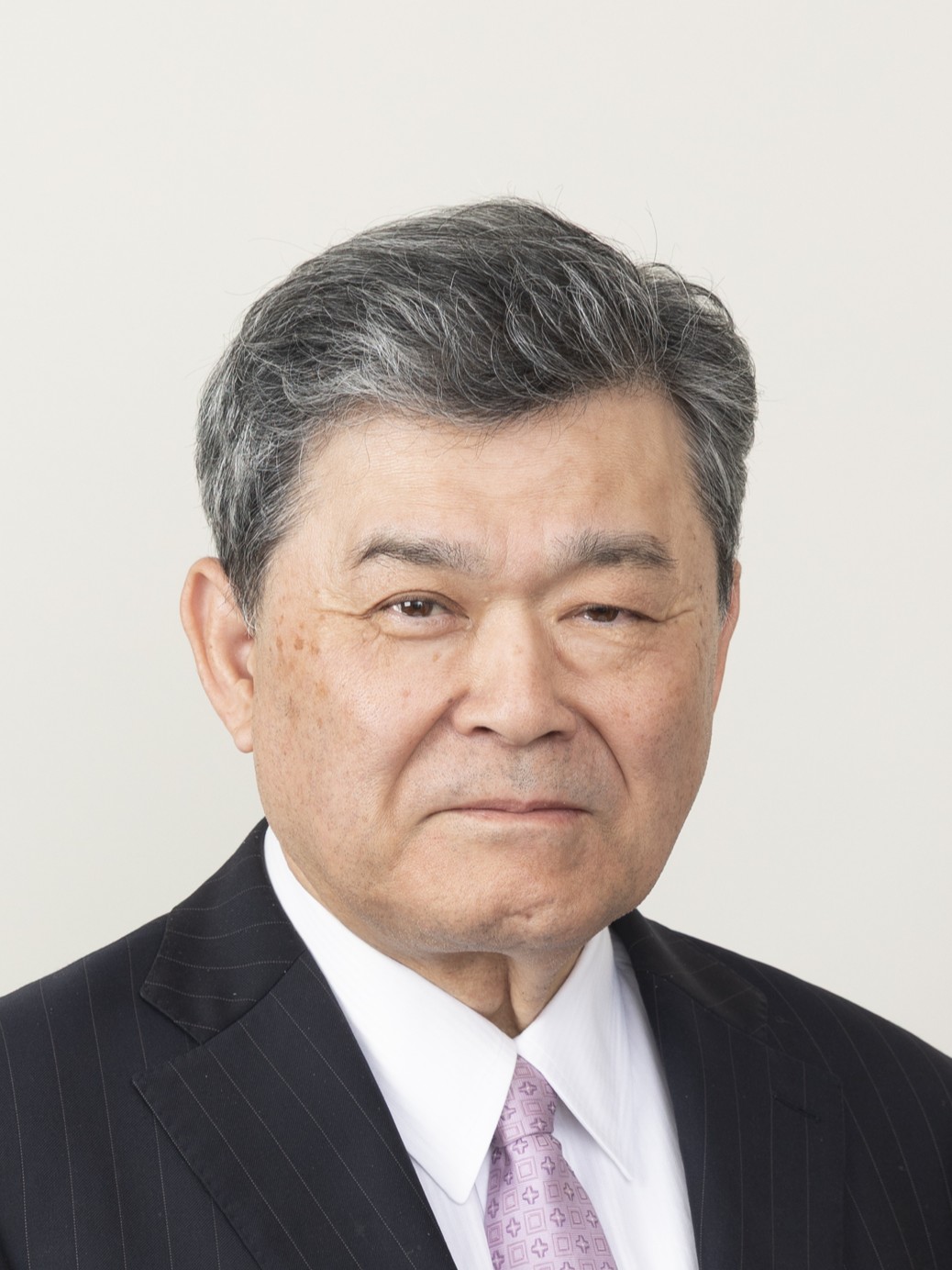
Director, Executive Managing Officer, Nisshinbo Holdings Inc.
Representative Director President and Chief Executive Officer, Japan Radio Co., Ltd.
Director, Executive Chairman, KOKUSAI DENKI Electric Inc.
Kaichiro Sakuma
Message from the President
Building My Career as a Systems Engineer and Leading Structural Reform as a Business Executive
I am Kaichiro Sakuma, and in March 2026 I assumed the positions of president of Japan Radio and chairman of KOKUSAI DENKI Electric.
After joining Hitachi, Ltd., in 1979, I worked as a systems engineer and was involved in the development of a wide range of information systems. One such project was the Japan Meteorological Agency’s weather forecasting system, where I had the opportunity to work with observation data from weather radar systems. Looking back, I have learned that those weather radar systems were manufactured by Japan Radio, making this appointment feel all the more meaningful.
Later, as an executive officer of Hitachi and as president of Hitachi Solutions and Hitachi Kokusai Electric Inc. (now KOKUSAI DENKI Electric Inc.), I led structural reform initiatives, including the turnaround of unprofitable businesses and organizational restructuring. When KOKUSAI DENKI Electric joined the Nisshinbo Group, I also participated in the transaction from the KOKUSAI DENKI Electric side. I never imagined that these experiences would eventually lead me to Nisshinbo and Japan Radio. Nevertheless, I regard this connection as destiny and will draw fully on the experience I have accumulated throughout my career to achieve sustainable growth and improved profitability.
My Vision for the Wireless and Communications Business
Supporting Frontline Workers in Disaster Prevention, Defense, and Other Fields as a Wireless Communications Total Engineering Company
Looking at the business environment, investment by both the public and private sectors continues to expand under Japan’s growth strategies aimed at achieving strong economic growth and strengthening national security. Efforts to ensure public safety and security and address social issues are also accelerating. Against this backdrop, the Nisshinbo Group’s Wireless and Communications business has defined its vision as becoming a Wireless Communications Total Engineering Company through DX solutions that leverage wireless communications, sensing, AI, and other technologies, we will support frontline workers operating at the forefront of disaster prevention, defense, maritime transportation, and many other fields.
Both Japan Radio and KOKUSAI DENKI Electric (hereinafter referred to collectively as “we”) have built our businesses around wireless communications. Over many years, we have developed private wireless networks and provided reliable communications environments in locations where commercial carriers do not offer services and radio signals are difficult to access, including remote mountainous areas, manufacturing sites, construction sites, and mining operations. One of our key strengths is our ability to install base stations wherever communications infrastructure is required, build network systems, and provide dedicated wireless communications environments. We continuously develop new technologies and provide products and systems that meet the needs of the times, while responding to our customers’ diverse requirements and helping solve the challenges they face.The markets we serve are centered primarily on social infrastructure fields such as disaster prevention, defense, roads, railways, and maritime operations. Because these systems often have life cycles spanning 10 to 20 years, it is essential not only to build and deploy them but also to ensure stable operation through ongoing maintenance and support. Providing customers with long-term reliability and peace of mind is therefore a critical part of our mission.
We have long provided these services on a one-stop basis. Today, however, demand for DX solutions utilizing IT systems is growing rapidly. By leveraging our strengths in wireless communications technologies, we aim to evolve into a Wireless Communications Total Engineering Company that delivers DX solutions capable of addressing a wide range of challenges faced in the field.
Strengths
Advancing to the Next Stage of Growth by Combining Wireless Communications Technologies Refined in the Field over a Century with AI
The world of radio waves and wireless communications encompasses a wide range of applications, from familiar devices such as Wi-Fi routers to largescale telecommunications infrastructure, television broadcasting systems, and even marine radar systems. Designing and implementing these systems requires a comprehensive approach that takes into account factors such as frequency bands, transmission power, radiation angles, and the optimal placement of base stations to ensure coverage across the target area. It also demands extensive experience and expertise to address challenges such as avoiding obstacles and preventing communication disruptions.In addition, operation of these systems requires strict compliance with radio regulations and other applicable laws, as well as the acquisition of licenses and approvals through often complex regulatory procedures. Wireless communications is therefore a highly specialized field that is not easy to master. For more than 100 years in the case of Japan Radio, and nearly 80 years in the case of KOKUSAI DENKI Electric, we have continuously advanced our technologies, accumulated extensive experience through deployment in the field, and built a wealth of expertise and know-how.
The development capabilities and proven track record cultivated through these efforts represent our greatest strength. By actively incorporating cuttingedge technologies, including AI, into this foundation, we will further enhance both functionality and cost competitiveness while maintaining and strengthening our competitive advantage in global markets.
Fiscal 2030 Targets
Achieving the Fiscal 2030 Targets for the Wireless and Communications Business and Pursuing Further Growth Beyond Them
The Nisshinbo Group has established fiscal 2030 targets for the organic growth of its Wireless and Communications business of sales of ¥300 billion, operating income of ¥30 billion, and an operating margin of 10%. To achieve these targets, we are pursuing both ongoing structural reform and growth initiatives as the two pillars of our strategy.
The Nisshinbo Group’s Wireless and Communications business segment consists of four fields: government and public-sector demand, private-sector demand, marine, and specialized equipment. Across all these fields, we expect the importance of the safety and security solutions we provide to continue increasing against a backdrop of increasingly severe natural disasters associated with global warming, rising geopolitical risks, Japan’s declining and aging population, and growing marinerelated demand driven by the revitalization of Japan’s shipbuilding industry. We view these trends as significant tailwinds for our business.
At the same time, although segment performance in fiscal 2025 reached sales of ¥251.8 billion and operating income of ¥17.7 billion, the operating margin was approximately 7%, indicating that our earnings base is not yet sufficient. Our most urgent priority is the structural reform of the Japan Radio Group. In the previous fiscal year, as Phase 1 of this reform, we carried out workforce optimization measures, consolidated business functions within Japan Radio and Ueda Japan Radio, and integrated manufacturing functions into Nagano Japan Radio. Through these initiatives, the Group was reborn as a new “One JRC.” In the current fiscal year, we are continuing structural reforms as Phase 2, with a particular focus on reviewing business processes, while working to establish a stronger management foundation as a true One JRC organization.
The other pillar of our strategy is the pursuit of growth. To achieve our targets, we will further strengthen our existing core businesses—including government and public-sector demand, specialized equipment, and marine—while positioning private-sector demand as a growth business and pursuing its further expansion.
Business Growth Strategy
Strengthening Our Core Businesses and Accelerating Growth Businesses—A Business Strategy Centered on Wireless Communications × DXe
In the government and public-sector demand business, while dramatic market growth might be difficult to expect, the nature of the challenges that must be addressed is evolving. By responding appropriately to these changing needs, we will maintain and grow this business as one of our core businesses. Under the concept of “wireless communications × DX,” we aim to realize more advanced river management and disaster prevention solutions.In river monitoring and dam management, for example, information captured by water-level sensors and cameras can be analyzed to support water-level control through gate operation and enable rapid evacuation orders based on forecasts of dangerous water-level conditions. In disaster prevention, Japan Radio has particular strengths in wide-area disaster prevention systems at the prefectural level, while KOKUSAI DENKI Electric specializes in disaster prevention systems for municipalities. By combining the strengths of both companies, we will generate synergies and deliver greater value to our customers.
The specialized equipment business is operating in a highly favorable environment, supported by tailwinds such as increased defense spending and institutional reforms driven by rising geopolitical risks. We will align our technologies with the seven priority areas identified for the fundamental strengthening of Japan’s defense capabilities, while intensifying research and development in areas where additional capabilities are required. In addition to our traditional business domains, we will challenge ourselves in emerging fields such as space, cyber, and electromagnetic technologies, further contributing to a safer and more secure society. In the marine business, we will capitalize on growing demand associated with efforts to revitalize Japan’s shipbuilding industry and pursue additional orders. At the same time, we will accelerate our global expansion through collaboration with Alphatron, our subsidiary with operations across Europe and other regions worldwide. We will also respond to the trend toward smart ships, including autonomous vessel operation, by rapidly developing and bringing DX solutions to market, while expanding our business into a broader range of marinerelated fields. In the private-sector demand business, which we position as a growth business, we will target worksites supporting social and industrial infrastructure, including manufacturing, construction machinery, transportation, and railways. By developing a range of DX solutions for smart manufacturing and other smart infrastructure applications, we will cultivate new markets through a solutions-based approach and pursue further growth. By deploying wireless communications networks throughout worksites like a network of capillaries, we will optimize operations using sensing technologies, data analytics, and Physical AI, thereby supporting frontline workers in a wide variety of operating environments. In addition, drawing on our extensive experience in designing and manufacturing products in-house, we aim to establish an electronics design and manufacturing service (EDMS) business that goes beyond conventional ODM design and manufacturing services to encompass the construction of manufacturing lines, including the use of robotics. We intend to develop this into a new pillar of earnings as a high-value-added service supporting the entire manufacturing process.
Strengthening Human Capital and Transforming Our Corporate Culture
Becoming a Company Filled with the Spirit of Netsu , Ri , and Jo That Stands for Passion, Logic and Empathy.
With respect to human capital, we are working to expand our talent base beyond our traditional hardware-centered engineering workforce by strengthening capabilities in software technologies and systems engineering. Given the rapid pace of technological advancement in these leading-edge fields, there are limits to what can be achieved through internal development alone. We will therefore further strengthen our capabilities through industry–academia collaboration where appropriate. At the same time, a mindset of “taking the first step” is essential to advancing both structural reform and business growth. Because Japan Radio and KOKUSAI DENKI Electric both have long histories, neither company can be said to possess sufficient vitality when it comes to proactively embracing change. We recognize this as a significant challenge. I continually encourage each employee to remain conscious of this issue and to take that first step with courage. Throughout my career, I have aspired to build organizations characterized by netsu (Passion), ri (Logic), and jo (Empathy). Without losing sight of these three principles, we will learn from the past, envision the future, think deeply about what must be done today to realize that future, and move forward step by step together with our employees with determination and conviction.
I am convinced that the accumulation of these efforts will create an organization capable of adapting to change and achieving sustainable growth, ultimately enabling us to remain a company that continues to be chosen by all our stakeholders.
To Our Stakeholders
I would like to express my sincere gratitude to all our stakeholders—including our customers, business partners, and the communities in which we operate—for the tremendous support you have shown us over the years. Guided by the spirit of sanpo yoshi—the principle that business should benefit all parties—we will continue to build win–win relationships based on trust. By creating value for society, our customers, and the Nisshinbo Group alike, we will strive to achieve sustainable growth and deliver stable results.
We look forward to your continued support for the Nisshinbo Group’s Wireless and Communications business and sincerely appreciate your ongoing support and guidance.